


Flea beetles come in a variety of species. While some species attack a large variety of plants, others exclusively strike a few families of plants. Brassicas such as kale, broccoli, cabbage and radishes, as well nightshades, like tomatoes, peppers, and eggplants, are especially vulnerable.
What Do Flea Beetles Look Like?
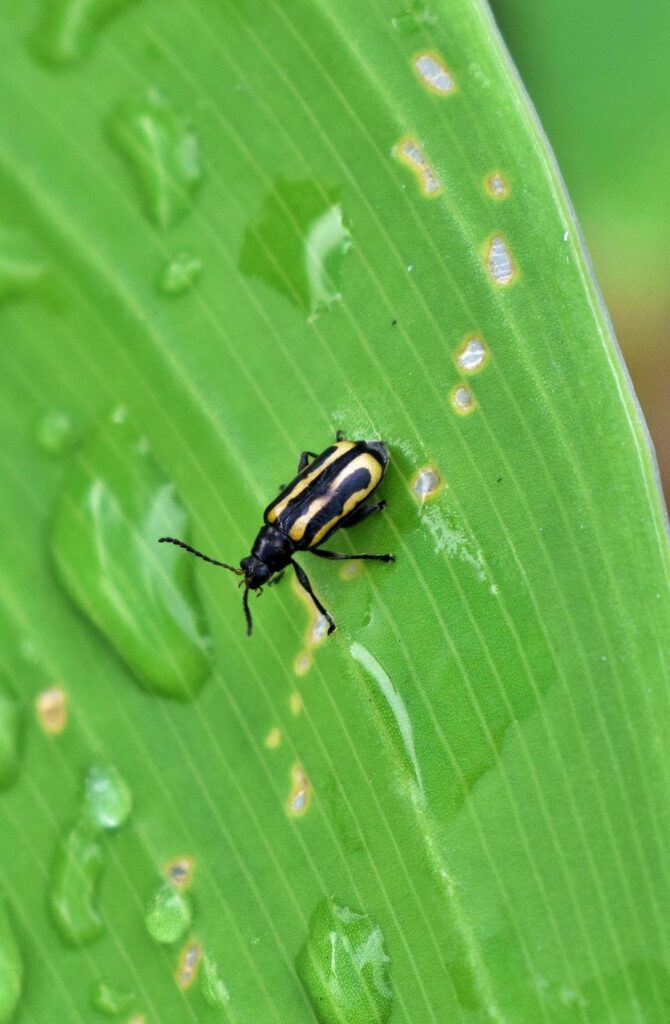
Flea beetles are tiny shiny beetles with really large rear legs. They only measure about ⅙” in size and can be either black, tan with stripes, or very colorful. Flea beetles get their “flea” name because they jump just like fleas.
How Do I Know If I Have Flea Beetles?
Flea beetles like to hide in wooded areas in the winter and emerge early spring at around 50°F temperature. They lay eggs early in the summer and once the eggs hatch, the larvae begin to eat plant roots.
Once full grown, flea beetles spend their days chewing the middle parts of leaves. Flea beetle infested plants will be populated with leaves that have multiple holes. New leaves will be attacked first, so younger plants are at a higher risk of dying if attacked by flea beetles. The beetles will not fully destroy larger plants, but they will surely reduce the quality of edible leaves.
Apart from making tiny holes in leaves, flea beetles can also spread wilt and blight, two infection causing bacteria which can further deteriorate plant health.
How to Control Flea Beetles?
Flea beetles can be combated with a water and soap solution. The beetles should be eliminated on contact, but spraying can be repeated as needed to ensure flea beetles are fully eradicated.