


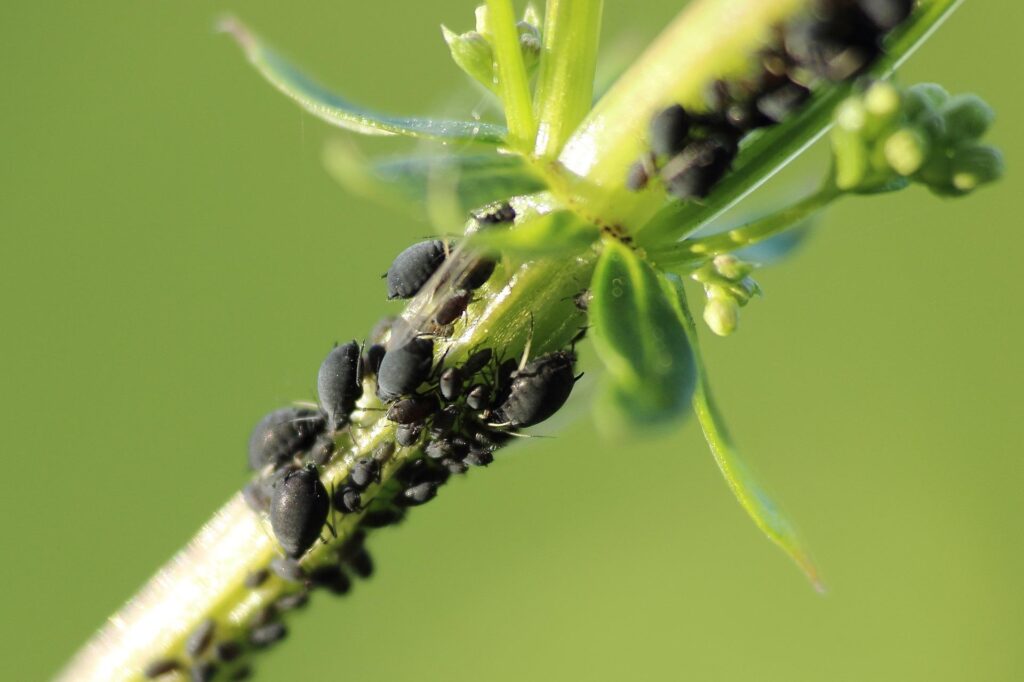
Aphids, aphids, aphids. Aphids are the most prevalent unwanted insects in my garden. They particularly love my brassicas, such as cauliflower and kale, but they'll attack other garden goodies, too. Fortunately, aphids are pretty stationary—they move pretty slowly and are easier to control compared to other pests.
What Do Aphids Look Like?
- Small bugs under ¼ inch in size.
- Can be white, black, brown, gray, yellow, light green, or even pink
- Can look waxy.
How Do I Know If I Have Aphids?
You know you have an aphid infestation if you see hundreds (or thousands) little gray, green or pink bugs on your plant leaves. In many cases however, you may instead first note deformed and yellowing leaves, slowed growth, and black substances on your plants.
Aphids favor new plant growth over more robust old foliage, feeding on soft stems, branches, buds and fruit. They pierce the stems and suck the plant's nutrient-rich sap, leaving behind curled or yellowed leaves, malformed blooms, or harmed fruit.
As they eat your plants, aphids produce a sticky fluid called honeydew, which quickly develops a black sooty mold infestation. Additionally, their bites can disperse viruses, many of which can be fatal to your plants.
Aphids typically gather in huge groups to feed. They can seriously harm certain plants or even whole crops, depending on the severity of the infestation. Aphids can produce many generations in a single year, causing infestations to grow out of control very quickly. The quicker you treat aphids, the lower their opportunity to reproduce.
However, aphids can often be difficult to control because they like to overwinter as eggs and hatch in the spring.
How to Control Aphids
Water Pressure
Use a garden hose to spray a strong stream of water to dislodge aphids off plants. This method is most effective early in the season, before an infestation has fully taken hold. Please note that this method may not be suitable for younger or more sensitive plants, but it works well on plants where more water pressure can be used.
Soap
Spray your affected plants with a soapy solution. The soap kills aphids and other soft-bodied insects by dissolving their protective outer coat. This is a great insecticide option as birds and hard-bodied helpful insects like lacewings, ladybugs, and pollination bees are not harmed by soap. You can reapply soap every 2-3 days for 2 weeks.
Manual Removal
Put on some gloves and knock the pests off of stems, leaves and flower buds and into a bucket of soapy water. If your plant seems as though it can survive without the impacted leaves, you can remove the affected parts and place them in the bucket as well.
Introduce Beneficial Insects
Lacewings and ladybugs are two beneficial insects you may introduce to your garden as a natural aphid repellent.
Remove Aphid-Luring Plants
Aphids are particularly attracted to fennel, dill and dandelions. Removing these plants from the areas surrounding your other plants will help keep aphids away.
Plant “Smelly” Plants
I love onions and garlic, but turns out aphids do not. Aphids do not like the smell of onions and garlic, so planting either of these two veggies around the plants you wish to keep aphid-free should help in deterring aphids from your prized plants. This method should be particularly helpful for keeping aphids away from lettuce and peas.